

Love’s Rose: How to Cultivate for Higher Yield

- Update Time : Sunday, February 15, 2026
- 516 Time View
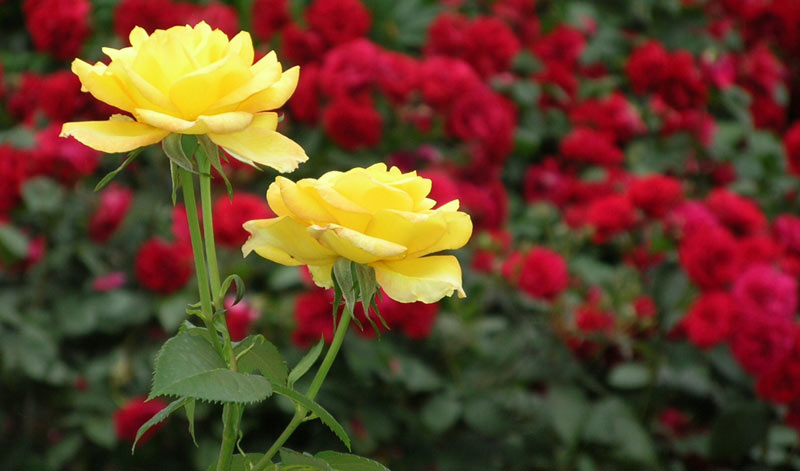
RN Desk: Rose is a winter seasonal flower. However, it is now cultivated throughout the year. Considering its color, fragrance, elegance, and beauty, the rose is called the “Queen of Flowers.” It is the most beloved flower among flower lovers. Roses can easily adapt to different climates, which is why they are cultivated in almost every country around the world. Roses are widely used as cut flowers. They are also popular for social and religious events, and for decorating gardens, lawns, beds, and balconies. Roses are also used in the perfume and fragrance industry.
Varieties of Roses
There are mainly seven types of roses:
- Hybrid Tea
- Hybrid Perpetual
- Polyantha
- Floribunda
- Miniature
- Climber
Land Selection
Roses grow well in soil where water does not stagnate. Loamy soil mixed with organic manure is highly suitable. The land should be high or medium-high, free from shade, well-connected, and have irrigation facilities. The soil pH should be between 6.0 and 7.5.
Climate
For good growth, roses require at least 6 hours of sunlight daily. The ideal temperature ranges from 15°C to 25°C.
Planting Time
The planting time depends on regional climate. In Bangladesh, roses can be planted throughout the year, but mainly in two seasons:
- Rabi season: Early September to late October
- Kharif season: Mid-March to mid-April
About 12,000 seedlings can be planted per acre.
Note: Excessive heat and heavy rainfall are harmful to rose cultivation.
Propagation Methods
Although roses can be grown from seeds, farmers mainly use cuttings or grafted plants. Common methods include:
1. Air Layering
Select a healthy branch and remove 3–5 cm of bark in a ring shape. Apply a mixture of loamy soil and cow dung around the exposed area and wrap it with polythene. Roots appear within 5–6 weeks. Then cut and plant the new seedling.
2. Stem Cutting
Select a strong branch about 20–22 cm long. Remove lower leaves and thorns and plant in loose soil mixed with organic manure. Roots develop within 6–7 weeks.
3. Budding
In this method, a bud from a good variety is attached to a rootstock (usually wild rose). A T-shaped cut is made on the rootstock, and the bud is inserted and tied with polythene. Within 2–3 weeks, a new plant develops.
Land Preparation
- Apply organic manure and mix thoroughly with soil.
- Maintain soil pH with lime if necessary.
- Plough 8–10 inches deep.
- Mix TSP and MOP fertilizer during final ploughing.
Planting Method
Dig holes 20–30 cm wide and 25–30 cm deep. Maintain spacing of 2 feet between plants and 3 feet between rows. Ensure proper planting and firm soil around the base.
Fertilizer Application (Per Acre)
- Cow dung: 2000 kg (during land preparation)
- Organic manure: 600 kg
- TSP: 50 kg
- MOP: 20 kg
- Urea: 100 kg (first year, 20–25 days after planting)
- Zinc: 12 kg
- Oil cake: 150 kg
Crop Management
Irrigation
Provide light irrigation 2–3 days after planting. Later irrigate every 15–20 days. Ensure proper drainage.
Weed Control
Use Trifluralin at 1.8 kg per acre or remove weeds manually.
Pruning
Pruning removes dead, weak, and diseased branches, encouraging new growth and better flowering.
Mulching
Apply compost, straw, or sawdust to retain soil moisture and reduce weeds.
Pest and Disease Management
Aphids
They suck sap from leaves and buds.
Control: Remove affected leaves or spray soap solution or recommended insecticides.
Thrips
Cause curling and discoloration of leaves and flowers.
Control: Maintain cleanliness and spray suitable insecticides.
Mites
Cause yellowing and drying of leaves.
Control: Spray neem oil or sulfur-based fungicides.
Dieback Disease
A fungal disease causing branch tips to dry.
Control: Prune affected parts and apply copper oxychloride paste.
Black Spot Disease
Dark spots appear on leaves.
Control: Spray Mancozeb or copper-based fungicides.
Powdery Mildew
White powdery substance appears on leaves and buds.
Control: Spray sulfur-based fungicide every 10–12 days.
Flower Harvesting
Buds appear 80–110 days after planting. Harvest when the bud shows color but petals have not fully opened. Early morning or before sunset is the best time for cutting. Use sharp tools and keep long stems for better market price.
Flower Yield
Per acre production ranges from approximately 370,500 to 494,000 flowers annually.
Post-Harvest Handling
Spray buds with a solution of 400 ppm hydroxyquinoline citrate mixed with 4% sugar. Store in cartons at 4–10°C for up to three days.
Packing
Use boxes 3.28 feet long, 13 inches wide, and 2.5 inches high. Each box can hold 80 roses (26–28 inches stem length). Pack 20 buds per bundle using rubber bands and protective wrapping.
By following proper cultivation, care, and disease management practices, farmers can achieve higher yields and better profits from rose farming.


List of Advisers
Mohammad Ismail, Former Chairman, Board of Directors, Bangladesh Krishi Bank(BKB) & Prsident , Barisal Bibhag Kalyan Sangstha
Dr. Mohammad Shadi-Uz-Zaman, Managing Director, Natundhora Group, Co-Chairman, FBCCI Standing Committee on Land Developers
Md. Ali Hyder Talukder, Chairman, AHT Agro Industries Limited
Advocate Nasir Uddin Ahmed, Ex-General Secretary, Dhaka Taxes Bar Association
Advocate Munshi Abdur Rahman, A Valiant Freedom Fighter & Legal Adviser, European University Bangladesh, EUB
Dr. Md. Shah Alam FF, Deputy Managing Director, Sobuj Saya Goup
Md. Mahbub Hossain Bhuiya, Managing Director, Matrichaya Properties Ltd.
Md. Altaf Hossain, Senior District & Sessions Judge (Retd) & Legal Adviser, Agrani Bank Limited
Maqsuda Begum, Ex- Executive Director, Bangladesh Bank
------------------------------------------------------------------------------------------------
Editor & Publisher: Mahmudul Haque Khan Dulal
Chief Editor: Md. Delowar Hossain Khan (VP Shahin)
Business Consultant: B.C Sarker
Managing Editor: Md. Arshad Ali
Assistant Editor: Parvin Akter, Fatematuz Johora
Editorial & Commercial Office: 81/C, Kakrail, Dhaka
Mob. 01711356318 (Whats App), 01581053046, E-Mail: dulalkhanm@gmail.com, bbjs.bd15@gmail.com , ( A Publication of MB Media)