

No National development without farmers’ development – Agriculture Adviser

- Update Time : Sunday, February 15, 2026
- 219 Time View
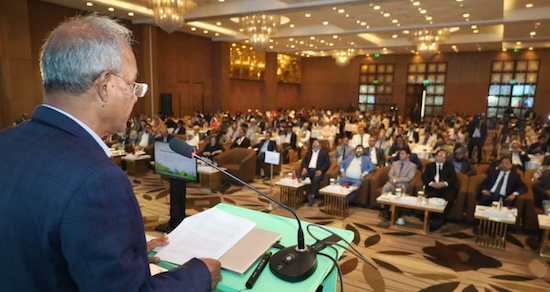
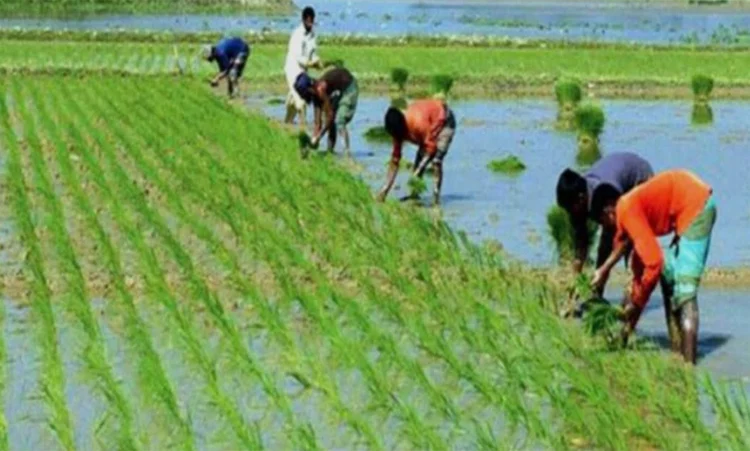
RN Desk: Agriculture and Home Affairs Adviser Lieutenant General (Retd.) Md. Jahangir Alam Chowdhury said that farmers are the backbone of the nation, but although this is often stated verbally, it is rarely reflected in practice. He added that farmers do not receive fair prices for their produce. Without the development of farmers, there can be no development of agriculture.
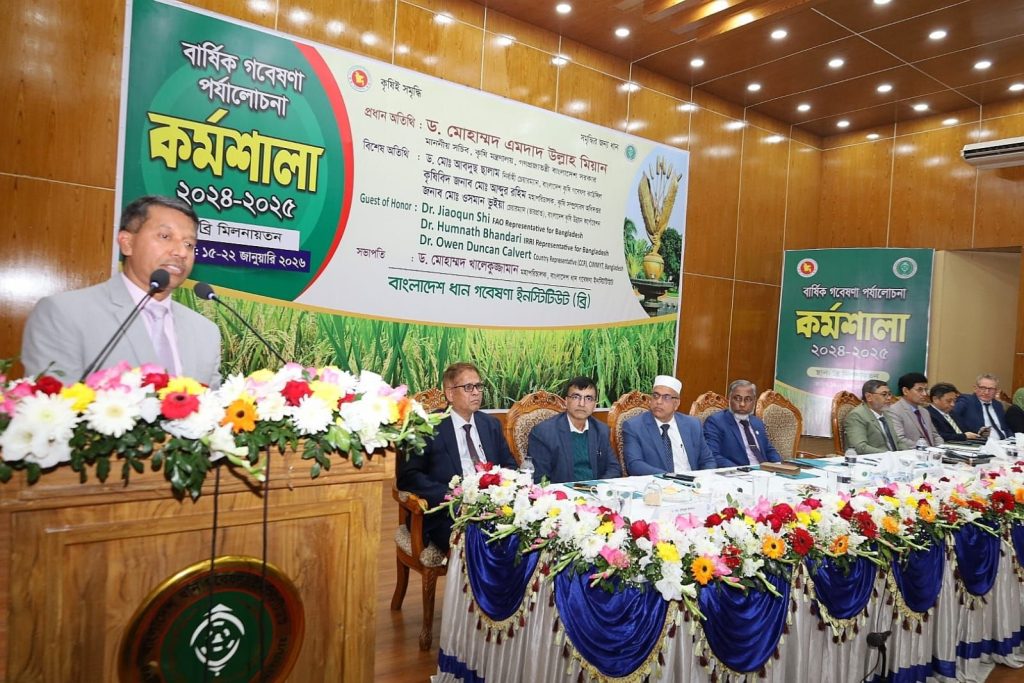
The adviser made these remarks rebently (Wednesday, January 28) while speaking as the chief guest at the inauguration of the national workshop titled “Transforming Bangladesh Agriculture: Outlook 2050” held at a hotel in the capital.
The event was chaired by Agriculture Secretary Dr. Muhammad Emdad Ullah Mian. Special guests included Dr. Ziqun Shi, Representative of the Food and Agriculture Organization (FAO) in Dhaka; Dr. Md. Mustafizur Rahman, Member (Secretary) of the Planning Commission; and Dr. Manjur Hossain, Member (Secretary) of the General Economics Division. The keynote paper was presented by Additional Secretary of the Ministry of Agriculture, Dr. Md. Mahmudur Rahman.
The Agriculture Adviser stated that farmers are sometimes forced to discard their produce due to low prices, and although there is temporary public concern, when attempts are made to provide incentives to compensate for their losses, various obstacles arise. Under such circumstances, farmers will not survive. And without the advancement of farmers, the country cannot progress. Therefore, to develop agriculture, farmers must be made economically self-reliant.
He further said that industrial owners often take loans from banks and fail to repay them, whereas farmers struggle to obtain loans. Moreover, industrialists sometimes get loan waivers with only two percent interest and receive various incentives. But when it comes to providing incentives to farmers, many barriers appear.
The adviser remarked that while some may think that if farmers do not produce, food can simply be imported from abroad, money alone does not always guarantee the availability of goods. Therefore, the country must produce its own food.
Regarding the Outlook plan, he described it as a historic moment for the nation, stating that the plan aims to shape the future of Bangladesh’s agricultural sector. Over the next 25 years, the transformation of agriculture will play a crucial role in improving living standards, ensuring food security, and advancing rural development.
He added that the successful implementation of this plan will be vital not only for the agricultural sector but also for the country’s overall economic progress.
It was mentioned that the reason behind formulating “Transforming Bangladesh Agriculture: Outlook 2050” is that agriculture has long been a major pillar of Bangladesh’s economy—ensuring food security, generating employment, reducing poverty, and sustaining rural livelihoods. Over the past five decades, the country has made remarkable progress, moving from a state of chronic food deficit to near self-sufficiency in staple food production.
Growth in the agricultural sector has significantly contributed to income generation and livelihood stability, particularly in rural areas. Although Bangladesh is currently undergoing structural economic transformation and agriculture’s share in GDP and employment is gradually declining, the sector remains extremely important for national stability and inclusive development. At the same time, climate change, resource constraints, demographic pressure, changing food demand, and market volatility are creating new and increasing challenges for agriculture. These complex realities highlight the need for a long-term, integrated, and forward-looking agricultural development strategy.
In this context, the Ministry of Agriculture has undertaken the initiative to formulate “Transforming Bangladesh Agriculture: Outlook 2050.”

List of Advisers
Mohammad Ismail, Former Chairman, Board of Directors, Bangladesh Krishi Bank(BKB) & Prsident , Barisal Bibhag Kalyan Sangstha
Dr. Mohammad Shadi-Uz-Zaman, Managing Director, Natundhora Group, Co-Chairman, FBCCI Standing Committee on Land Developers
Md. Ali Hyder Talukder, Chairman, AHT Agro Industries Limited
Advocate Nasir Uddin Ahmed, Ex-General Secretary, Dhaka Taxes Bar Association
Advocate Munshi Abdur Rahman, A Valiant Freedom Fighter & Legal Adviser, European University Bangladesh, EUB
Dr. Md. Shah Alam FF, Deputy Managing Director, Sobuj Saya Goup
Md. Mahbub Hossain Bhuiya, Managing Director, Matrichaya Properties Ltd.
Md. Altaf Hossain, Senior District & Sessions Judge (Retd) & Legal Adviser, Agrani Bank Limited
Maqsuda Begum, Ex- Executive Director, Bangladesh Bank
------------------------------------------------------------------------------------------------
Editor & Publisher: Mahmudul Haque Khan Dulal
Chief Editor: Md. Delowar Hossain Khan (VP Shahin)
Business Consultant: B.C Sarker
Managing Editor: Md. Arshad Ali
Assistant Editor: Parvin Akter, Fatematuz Johora
Editorial & Commercial Office: 81/C, Kakrail, Dhaka
Mob. 01711356318 (Whats App), 01581053046, E-Mail: dulalkhanm@gmail.com, bbjs.bd15@gmail.com , ( A Publication of MB Media)