

Strict withdrawal periods set to prevent antibiotic residues in eggs and meat

- Update Time : Sunday, February 15, 2026
- 245 Time View
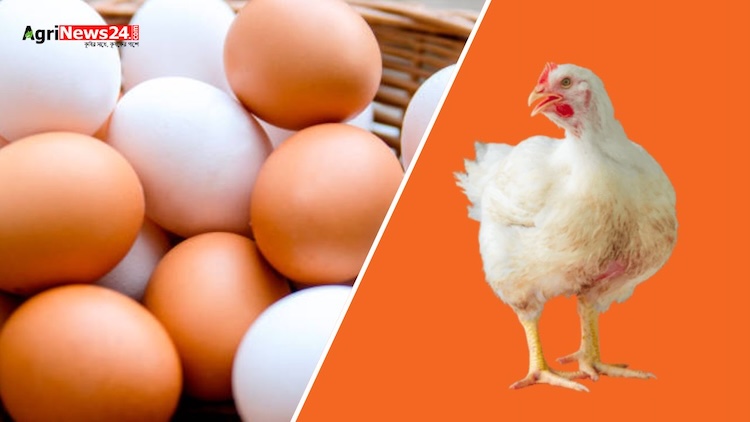
RN Desk: To ensure the production of safe eggs and meat in the country, the final draft of the National Poultry Development Policy 2026 has incorporated modern and strict guidelines regarding the use of vaccines and medicines in poultry. The policy prioritizes the controlled use of antibiotics, quality control of veterinary drugs, and the management of antimicrobial resistance (AMR), which stakeholders believe will play a significant role in protecting public health and ensuring food safety.
The draft policy states that the quality of imported or locally produced poultry medicines, vaccines, diagnostic kits, antigens, and antibodies must be strictly regulated in accordance with livestock-related laws and regulations. It also directs that the prescribed guidelines be strictly followed in the use of medicines, vaccines, antibiotics, probiotics, and prebiotics in poultry farms.
To prevent harmful drug residues in eggs and meat from entering the human body, the draft makes it mandatory to observe withdrawal periods after administering medications.
For the tetracycline group—Oxytetracycline and Chlortetracycline—the withdrawal period is set at 4–5 days for meat and 3–14 days for eggs.
For the macrolide group—Tylosin, Erythromycin, and Tilmicosin—the withdrawal period is 2–9 days for meat and 0–11 days for eggs.
For the fluoroquinolone group—Enrofloxacin and Ciprofloxacin—the specified withdrawal period is 7–9 days for meat and 15–28 days for eggs. These drugs are considered discouraged for use in egg-producing hens.
For the lincosamide group—Lincomycin—the withdrawal period is 13 days for meat and 9 days for eggs.
The policy further states that for the sulfonamide group—Sulfadimidine—the withdrawal period must be 10–28 days for meat and 10–40 days for eggs.
For the penicillin group—Procaine Penicillin and Amoxicillin—the withdrawal period is 7–28 days for meat and 7 days for eggs.
For the aminoglycoside group—Gentamicin and Neomycin—the withdrawal period is 14 days for both meat and eggs.
Additionally, for the nitrofuran group—Furazolidone—the withdrawal period is 28 days for both meat and eggs.
For the amphenicol group—Florfenicol—the withdrawal period is set at 7–28 days for meat and 28 days for eggs. Its use in egg-producing hens is considered inappropriate.
Sector stakeholders believe that effective implementation of the National Poultry Development Policy 2026 will reduce the misuse of antibiotics, help control the risk of antimicrobial resistance, and ensure consumers have access to safe and healthy eggs and meat. At the same time, the country’s poultry industry is expected to move toward more responsible, sustainable, and internationally compliant production standards.


List of Advisers
Mohammad Ismail, Former Chairman, Board of Directors, Bangladesh Krishi Bank(BKB) & Prsident , Barisal Bibhag Kalyan Sangstha
Dr. Mohammad Shadi-Uz-Zaman, Managing Director, Natundhora Group, Co-Chairman, FBCCI Standing Committee on Land Developers
Md. Ali Hyder Talukder, Chairman, AHT Agro Industries Limited
Advocate Nasir Uddin Ahmed, Ex-General Secretary, Dhaka Taxes Bar Association
Advocate Munshi Abdur Rahman, A Valiant Freedom Fighter & Legal Adviser, European University Bangladesh, EUB
Dr. Md. Shah Alam FF, Deputy Managing Director, Sobuj Saya Goup
Md. Mahbub Hossain Bhuiya, Managing Director, Matrichaya Properties Ltd.
Md. Altaf Hossain, Senior District & Sessions Judge (Retd) & Legal Adviser, Agrani Bank Limited
Maqsuda Begum, Ex- Executive Director, Bangladesh Bank
------------------------------------------------------------------------------------------------
Editor & Publisher: Mahmudul Haque Khan Dulal
Chief Editor: Md. Delowar Hossain Khan (VP Shahin)
Business Consultant: B.C Sarker
Managing Editor: Md. Arshad Ali
Assistant Editor: Parvin Akter, Fatematuz Johora
Editorial & Commercial Office: 81/C, Kakrail, Dhaka
Mob. 01711356318 (Whats App), 01581053046, E-Mail: dulalkhanm@gmail.com, bbjs.bd15@gmail.com , ( A Publication of MB Media)